

Culture

Intangible Cultural Heritage:The Angla Qianhu Memory Museum is officially operation
On August 12th, Intangible Cultural Heritage-Angla Qianhu Memory Museum located in Angla Township, Jianzha County, Huangnan Tibetan Autonomous Prefecture, Qinghai Province, was officially unveiled.

Researcher opens up digital future of ancient Tibetan script
In southwest China's Xizang Autonomous Region, the ancient Tibetan script, which dates back over 1,300 years, is now seamlessly integrated into modern digital life.

Young voices carry Tibetan opera's ancient echoes
As the drums rolled, performers wearing blue masks took to the stage, enthralling the audience with powerful vocals and bold dance moves.

World's cyclists hail Xizang's outdoor sports potential
Southwest China's Xizang Autonomous Region's landscapes, high-altitude roads and improving race organization are earning praise from cyclists worldwide, as the 2025 China Xizang Trans-Himalaya International Cycling Race concluded Sunday.

The first Rural Music Culture Festival successfully concluded in Wendu Township
On August 8th, the first Rural Music and Culture Festival with the theme of "the beautiful Xunhuaand the Hometown of Panchen Lama" came to a successful conclusion in Wendu Tibetan Township.

The 9th Cultural Month of Quanji Township grandly opened
To deepening ethnic unity and progress, promoting excellent ethnic culture,The launching ceremony of the National Unity and Progress Promotion Month in Haibei Tibetan Autonomous Prefecture in 2025, as well as the 9th Cultural Month series of activities in Quanji Township, Gangcha County,

Performance stimulates catering industry consumption in Lhasa
In recent years, the arrival of flagship stores in Lhasa, covering retail, dining, and entertainment, has introduced locals to new experiences while boosting the city's consumption upgrade.

Millennia-old embroidery of Tu ethnic group blooming with renewed vigor in NW China's Qinghai
Panxiu, a millennia-old traditional embroidery style unique to the Tu ethnic group in Huzhu Tu Autonomous County, northwest China's Qinghai Province, is embracing innovation and fueling local rural revitalization.

Xizang Internet Photography & Video Festival wraps up with awards ceremony in Lhasa
The 5th China Xizang Internet Photography & Video Festival awards ceremony was held on Friday in Lhasa, southwest China's Xizang Autonomous Region.

Intl influencers unveil Wuwei's nature, culture
Wuwei city, Gansu province — where echoes of the Silk Road still linger — 10 international influencers from the United States, Russia, Brazil, South Africa, Ukraine, Pakistan, Yemen, and Bangladesh embarked on a journey from July 21 to 23 to uncover the layers of time, tradition, and terrain.


Tibetan opera promoted in Namling County, China's Xizang
Child actors perform Tibetan opera at a park in Namling County of Xigaze City, southwest China's Xizang Autonomous Region, July 16, 2025.

China's Xizang reports gains against endemic diseases
Southwest China's Xizang Autonomous Region has achieved significant results in preventing and treating endemic diseases, the regional health authority said Wednesday.

Tibetan incense from Nimu
he Nimu tradition of making incense is a prime example of preserving biocultural heritage. Local artisanal households maintain proprietary formulations that include Crocus sativus and over 30 other endemic species.

China publishes Han-Tibetan version of major dictionary
China attaches great importance to the use of the Tibetan language, as evidenced by the recent publication of a key bilingual dictionary.
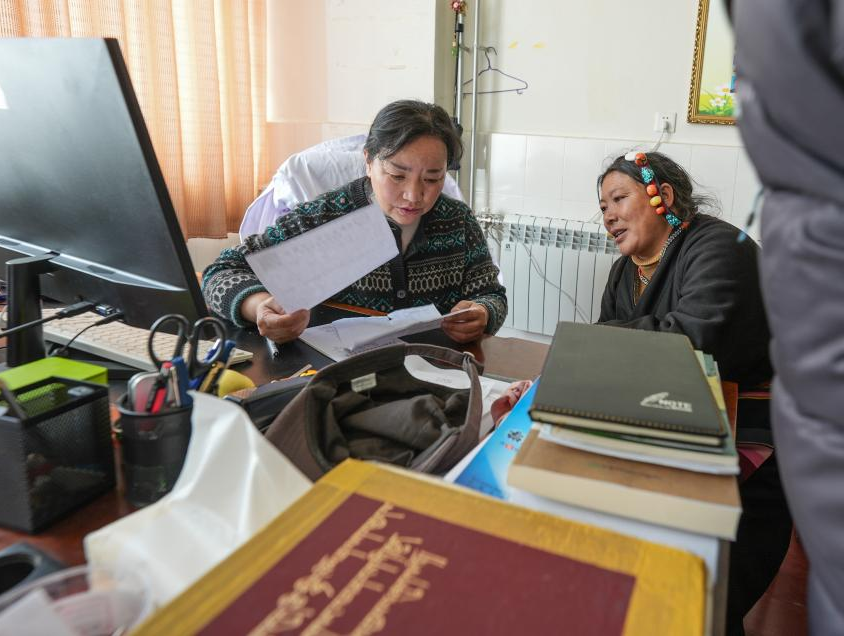
Xizang Story: Tibetan doctor brings ancient healing to global stage
In the University of Tibetan Medicine in southwest China's Xizang Autonomous Region, Mikyi Tsomo, a regional inheritor of the intangible cultural heritage of Tibetan medicine, was treating a patient who had traveled more than 600 kilometers to seek her medical help.

Li Xiaoke’s Art Exhibition Opened in Xizang Art Museum
Li Xiaoke (1944 - April 20, 2021) was a renowned landscape painter. Since the 1980s, he had visited Xizang 34 times to immerse himself in the local culture, take photographs, and create paintings from life. In his lifetime,

High-altitude site offers up intriguing insights
Recent archaeological findings suggest that humans living 4,000 years ago relied on fish resources from lakes to survive and thrive in extremely high-altitude environments.

Lhoka, Xizang: A Horse Parade Displays Rich Cultural Heritage
Recently, residents in Lhoka, Xizang, dressed in traditional costumes and rode on horseback, showcasing the beauty of their lively intangible cultural heritage through unique ethnic sports activities.

Singing the praises of folk culture
Dutch ethnomusicologist Frank Kouwenhoven, 69, poses for a photo with Hua'er singers in Minxian county early last month. Hua'er is a folk-song rendition popular in northwestern China.

Flying colors:Documentary focuses on hues that inspire traditional craftsmanship
Fashion is a circle — what fades away comes back around. On the Qinghai-Tibet Plateau in western China, dubbed "the roof of the world" for its high altitude, Tibetan women have applied an ocher-colored sunscreen makeup for more than a millennium

A key lakeside site in Xizang demonstrates human activities 4,000 years ago
Recent archaeological findings at the Mapu Tsho Lake in Kangmar county, Shigatse, the Xizang autonomous region suggest that humans living around 4,000 years agorelied on fish resources from lakes to survive and thrive in extremely high-altitude environments.

The first Langka Nangma DuiXie Competition of Lhasa was held in Taktse county
On June 28th, the first Lhasa Linka Nangma DuiXie Competition was held in Taktse county.

A guardian of Tibetan Buddhism grottoes in remote western Xizang
Hidden among sandstone hills in remote western Xizang, a stretch of honeycomb-shaped caverns is way beyond the reach of most travelers.