
The earliest Tibetan translation of Ramayana

Among the sands of Dunhuang, where the two great empires of Tang and Tubo once met and manuscripts slept for a thousand years, there lies one of Tubo‘s earliest encounters with the great Indian epic—the Ramayana. Translated into Tibetan sometime between the eighth and ninth centuries, during the Tibetan occupation of Dunhuang, this text stands as a quiet landmark in the history of Tibetan letters.
The manuscripts were rediscovered in the early twentieth century, scattered across the Mogao Caves like lost memories. Six fragments survive, divided between the British Library and the Bibliothèque Nationale in Paris. Among them, PT 981 offers a verse narrative of 276 lines; PT 983 preserves a shorter episode of 44 lines; and PT 982—strangest of all—weaves the names of Rama and Sita into the formal language of a Tibetan petition, as if the epic had wandered into the world of legal documents and betrothal letters.

This Dunhuang Ramayana belongs to the dawn of Tibetan literary translation. It is among the earliest known translations of the Ramayaṇa into any language, and its style is both simple and rigorous, its language refined and beautiful. Prose and verse alternate freely, as was common in early Tibetan storytelling. Recent linguistic study has revealed subtle artistry within the text—the careful shifting of first-person pronouns, for instance, marking changes in rhetorical stance and social relationship. This was no careless rendering. The translator worked with deliberate attention to style.
The Dunhuang version differs greatly from the Sanskrit original of Vālmīki, in both content and structure. Many episodes unfold differently; many plots take their own path. Most striking, perhaps, is what is absent: there is no overt Buddhist reinterpretation. The characters are not bodhisattvas, not divine emanations. The story is told as a secular tale of heroic adventure and moral conflict. This absence suggests that the Dunhuang text belongs to an early stage of Tibetan reception, before the Rama story was folded into Buddhist literary frameworks. It belongs, instead, to the “royal” genre of Ramayaṇa retellings—concerned with kingship, legitimate succession, and just rule—rather than the later devotional tradition of bhakti.
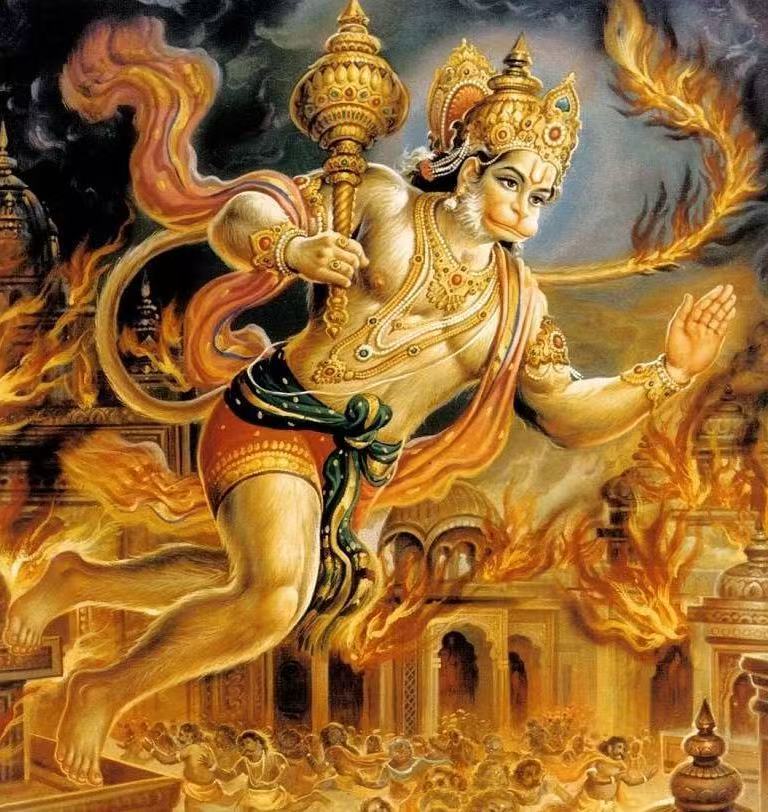
And yet this early translation planted a seed. The Rama story would continue to echo through Tibetan literature for centuries. Recent scholarship has traced intertextual connections between the Dunhuang Ramayaṇa and later Tibetan historical works, such as the Pillar Testament. The epic, it seems, provided a literary template for imagining Tibetan ideals of kingship, heroism, and moral order. Scholars have even proposed character mappings between the two works: Songtsen Gampo as Rāma, Princess Wencheng as Sītā, Princess Bhrikuti as Purpala. Four major Tibetan Ramayaṇa versions are known, and the Dunhuang translation stands at their head—the earliest, the most foundational.
Thus the Dunhuang Tibetan Ramayana remains a testament to the vitality and creativity of early Tibetan literary culture. It shows how Indian narrative literature was not merely translated but reimagined—bent, shaped, and made to speak in a new tongue, for a new people, on the roof of the world.