
Introduction to the Fivefold Testament of Tibetan Treasure Literature—Bka' thang sde lnga

Bka' thang sde lnga,meaning The Fivefold Testament,is a significant Tibetan revealed text (gter ma) attributed to the eighth-century master Padmasambhava and rediscovered by the treasure-revealer Orgyan Lingpa. Comprising five distinct but interrelated tantric-historical narratives, the text occupies a liminal position between history and revelation in Tibetan literary tradition. This article examines the textual identity, structural composition, and historiographical function of the Fivefold Testament, arguing that its significance lies less in the factual reliability of its historical claims than in its role as a vehicle for the valorization of Padmasambhava’s legacy within the Nyingma tradition.
The corpus of Tibetan revealed texts (gter ma) presents a distinctive epistemological challenge to conventional historical criticism. Among these works, the Bka' thang sde lnga—literally “The Fivefold Testament”—occupies a place of considerable importance within the Nyingma school’s literary heritage. According to traditional accounts, the text was concealed by Padmasambhava during the reign of King Trisong Detsen (eighth century) and later recovered from a cave at Yar klungs shel by the treasure-revealer Orgyan Lingpa. Modern editions, most notably the 1985 Beijing publication by Mi rigs dpe skrun khang, have made the text accessible to a broader scholarly readership.

This article provides a concise critical introduction to the Fivefold Testament, addressing three questions: What is its textual identity? How is it structured? And what historiographical function does it perform within Tibetan literary tradition?
The Fivefold Testament belongs to the category of bka' thang literature—narratives framed as the testamentary words of Padmasambhava, often combining biographical, ritual, and historical materials. The title itself signals its composite nature: sde lnga denotes “five sections” or “five divisions,” indicating that the work is not a unified composition but a collection of five interrelated texts.
Traditional provenance narratives assert a two-stage process of concealment and revelation. Padmasambhava is said to have entrusted the text to a concealed location, from which Orgyan Lingpa later retrieved it. This gter ma framework positions the text as simultaneously ancient in origin and post-eighth-century in material form—a paradox familiar to scholars of Tibetan revelation literature.
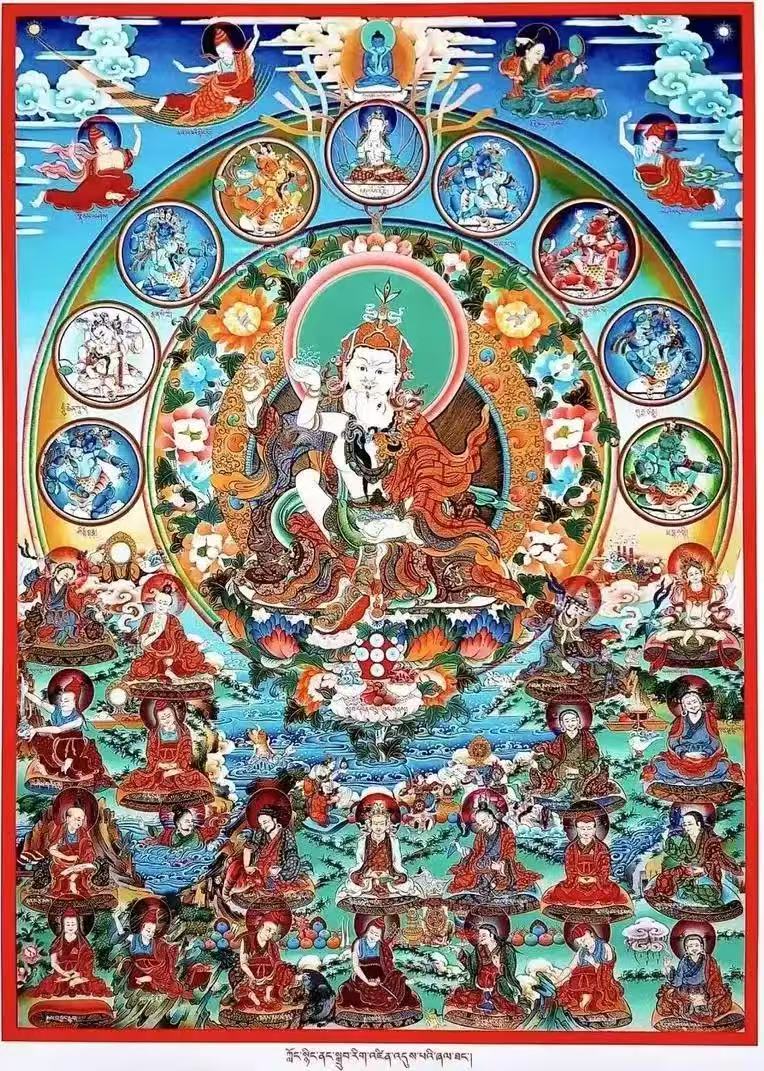
The five constituent sections of the Bka' thang sde lnga are not merely discrete units but are bound by a common thematic orientation toward the glorification of Padmasambhava’s activities in Tibet. The text covers a range of materials, from tantric teachings and ritual instructions to historical narratives concerning the Tibetan empire and its relations with neighboring polities.
The historiographical significance of the Bka' thang sde lnga lies not in its reliability as a documentary record but in its role as a “usable past” for the Nyingma community. The text participates in a broader Tibetan literary practice of retroactive attribution, wherein later compositions are ascribed to earlier authoritative figures to secure their legitimacy.
This practice has parallels in other Tibetan historical works, such as the Sba bzhed (Testament of Ba), which also blends narrative, hagiography, and historical memory in ways that resist simple categorization as “history” or “religious literature”. Indeed, the Bka' thang sde lnga is sometimes listed alongside such works as a representative example of the literary heritage.
The Bka' thang sde lnga is best understood not as a transparent window onto eighth-century Tibet but as a layered textual artifact reflecting the concerns of its revealers and redactors. Its fivefold structure, its gter ma provenance, and its pervasive valorization of Padmasambhava together constitute a distinctive mode of historical writing—one in which the past serves the present, and revelation functions as historiography.