
The Tibetan mantang as a visual encyclopedia of the four tantras
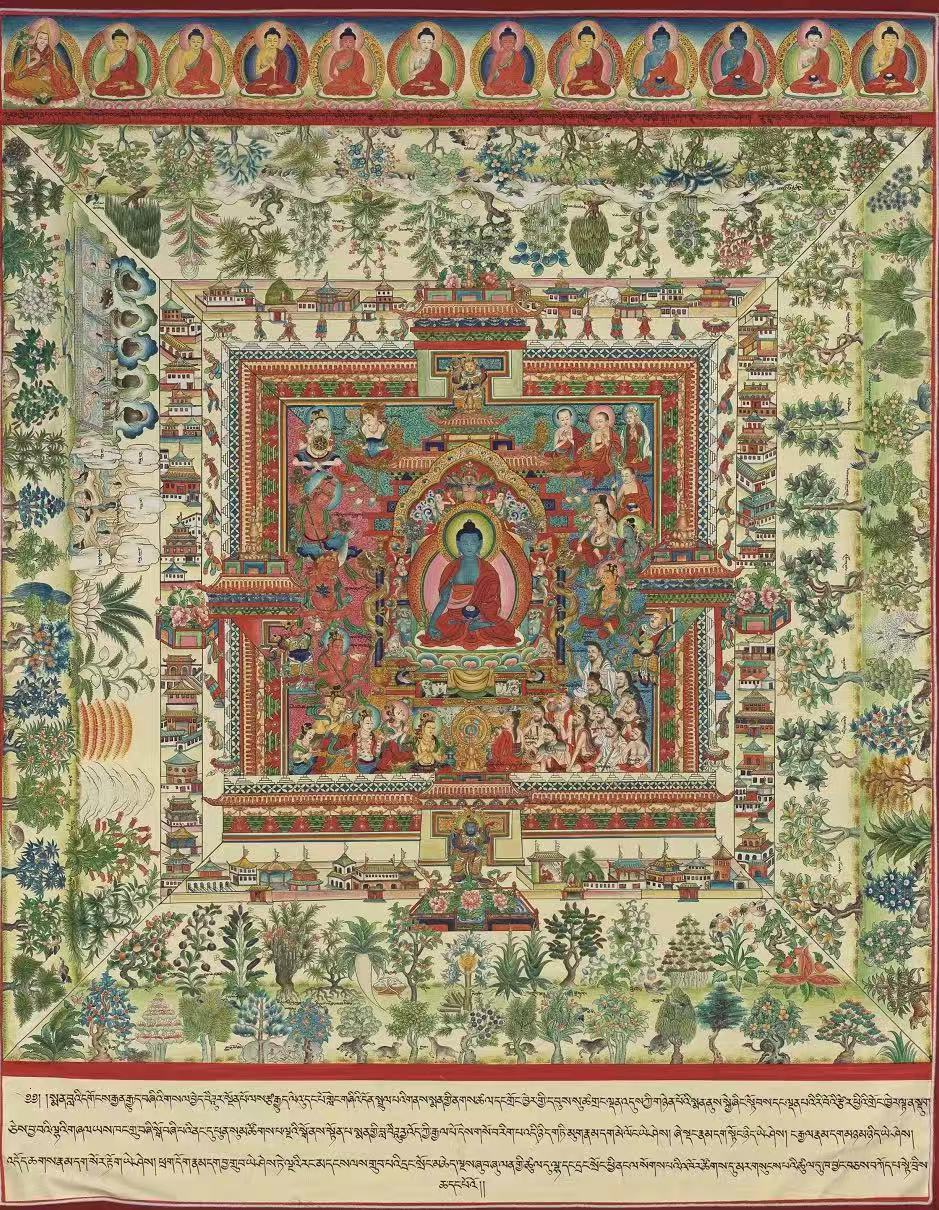
The Mantang,medical thangka,is a series of painted scrolls that make up the visual teaching system of Tibetan medicine. It was commissioned under the supervision of Desi Sangye Gyatso (1653–1705), the regent of the Fifth Dalai Lama, and was first completed as a full set between 1688 and 1703. The series has seventy-nine large scrolls illustrating the Four Tantras of Tibetan classic literature, plus a final scroll showing the lineage of famous physicians, making eighty in total. Made up of several thousand small scenes, the Mantang is widely seen as the world's earliest and most complete set of medical teaching charts. This paper gives a full academic account of the Mantang: its historical origins in the medical lineages of the eighth to seventeenth centuries; its textual basis in the Four Tantras and the Blue Beryl commentary; its structure across the four tantras; its main visual programs, including the Medicine Buddha's city, the famous "tree metaphors," embryology, anatomy, diagnosis, pharmacology, and therapeutic technique; the materials and artistic methods used to make it; and its modern status as documentary heritage and a tool of living transmission. The paper argues that the Mantang is at once a medical instrument, a work of art, and an epistemic device that encodes the holistic logic of Tibetan medicine in a new form of visual reasoning, and that its importance today lies in the meeting of heritage conservation, cross-cultural translation, and comparative medical history.
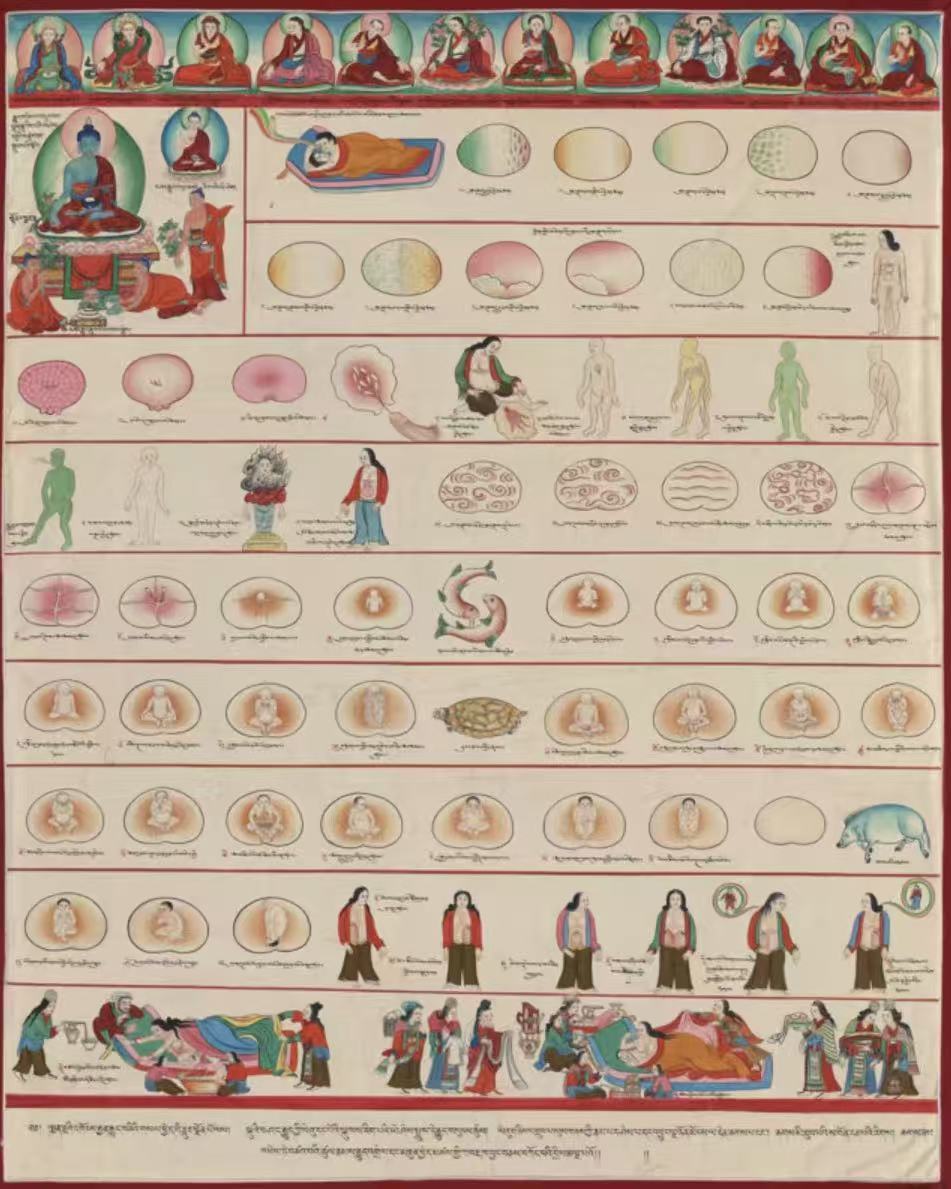
The word Mantang is a short form of two Tibetan words: sman ("medicine" or "healing") and thang, the Tibetan word for a scroll painting made on cloth and mounted with silk brocade, usually written in English as "thangka." The Mantang is therefore best understood as medical thangka—not as an object of religious worship, but as a teaching tool designed to make the contents of the Four Tantras, the foundational canon of Tibetan medicine, understandable at a glance. In the closing note to his commentary, the regent Desi Sangye Gyatso explained his motive in a phrase that has become a symbol of the series: he hoped that through these paintings, students of the Four Tantras would understand each chapter "like an arura fruit held transparently in the palm of the hand"—immediately, completely, and without confusion.
The Mantang holds a unique place in the history of medicine. While medical illustration in Greco-Roman, Islamic, and Chinese traditions developed in the form of book plates, herbals, and anatomical sheets, the Mantang is a large-format, wall-mounted system of connected diagrams designed for the lecture hall. Its scale, its systematic coverage, and its joining of doctrine with image make it, by broad scholarly agreement, the oldest and most complete set of medical teaching paintings in the world.

The main argument here is that the Mantang should not be treated as mere decoration added to a text, nor as a lower form of "illustration" in the modern sense. It is an independent epistemic device: a form of visual reasoning in which the structure of a whole medical system is laid out in image, allowing a kind of understanding that the written text alone cannot provide. Seeing it this way restores the Mantang to its proper place as a landmark in the global history of scientific visualization.
The urge to show medical knowledge in picture form in Tibet goes back long before the Mantang. Tibetan tradition records that in the eighth century, during the reign of King Trisong Detsen (reigned c. 755–797), the Central Asian physician Biji Tsanpa Shilaha, a master from Khotan invited to serve as court physician, wrote works including the Anthology of the Body (lus kyi mdo) and On the Measurement of the Living Body, which belonged to the genre of anatomical illustration. Such texts point to an early Tibetan interest in visualizing the body.
The eighth-century physician Yuthog Yonten Gonpo the Elder (708–833), honored as the father of Tibetan medicine, is credited by tradition with having taught the Four Tantras, drawn charts of the human skeleton, and put together anatomical illustrations of the internal organs. The eighty-fifth chapter of the Explanatory Tantra of the Four Tantras itself discusses where the body's parts and organs are located and describes in detail how to draw lines, set positions, and build diagrams—a teaching passage that laid direct groundwork for later medical painting. In the tenth century, Yuthog Yonten Gonpo the Younger (1112–1203) revised and expanded the Four Tantras, and the practice of adding drawn figures to the text continued. By the fourteenth century, the physician Changdri Paldan Tsogyal was producing anatomical and materia medica illustrations, which circulated widely.
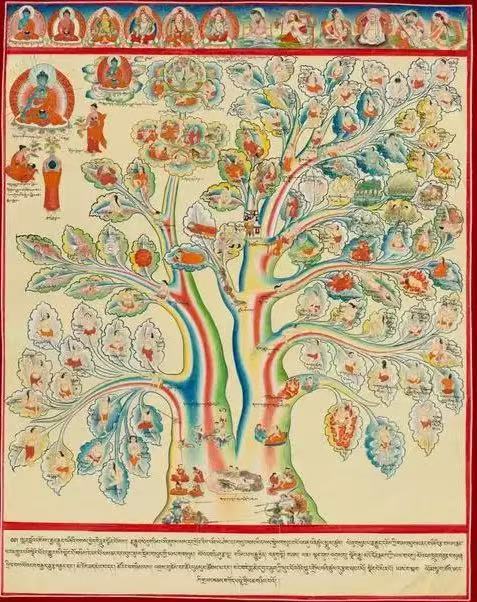
The decisive precondition for the Mantang was the rise, from the fourteenth century onward, of distinct Tibetan medical lineages. Two were especially influential: the Northern School (Jang-luk), linked to the master physician Lhunding Duzi Gyatso, which stressed textual explanation and diagrammatic illustration; and the Southern School (Sur-luk), linked to Surkar Lodro Gyalpo, which contributed especially to mapping moxibustion and bloodletting points and to materia medica. Both schools produced large bodies of teaching charts and drug illustrations, but these were local, inconsistent, and scattered. As Sangye Gyatso himself noted, the drawings then in circulation varied widely in names, anatomical placement, and the location of therapeutic points, and were "fragmented and disorderly." The lack of a reliable, uniform visual canon had become a clear obstacle to teaching.
The seventeenth-century Northern School physician Lhunding Duzi Gyatso (also written Lhunding Dutsi Gyatso) was a skilled painter whose complete set of teaching charts for the Four Tantras became the direct model on which the eventual Mantang was based. His work supplied both the visual vocabulary and the systematic ambition that Sangye Gyatso would later bring to completion.
The Mantang as a standardized series was created during the reign of the Fifth Dalai Lama, Ngawang Lobsang Gyatso (1617–1682). Its patron and intellectual architect was Desi Sangye Gyatso, who governed Tibet as regent from 1679 and who was himself a famous physician and scholar. Sangye Gyatso had been tasked in 1670 with revising the Four Tantras and preparing a new edition, a job that occupied him for some twenty-five years and that ended in his authoritative commentary, the Blue Beryl (Vaidurya ngon po), written between 1687 and 1688.
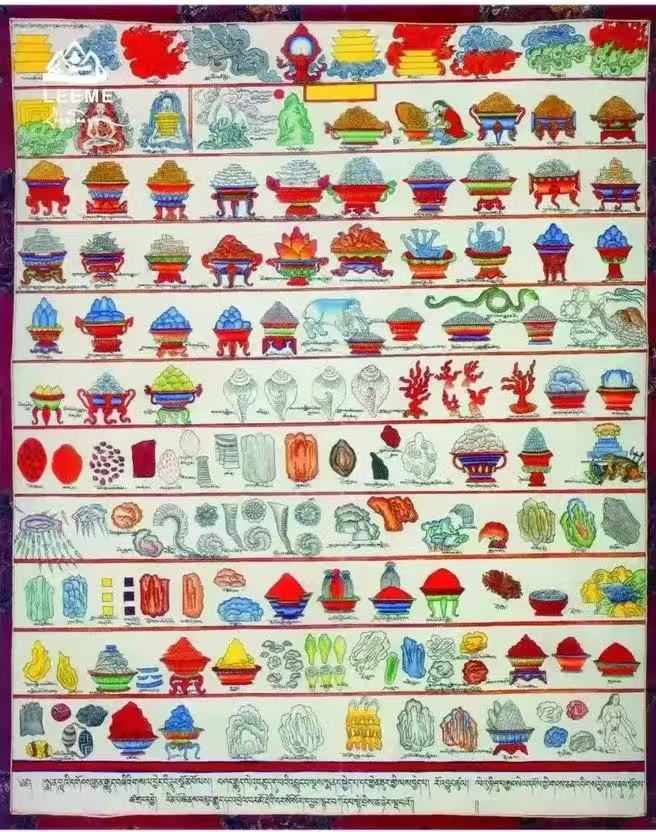
Recognizing that the text alone—dry, technical, and hard for beginners—needed visual explanation, Sangye Gyatso gathered the most distinguished physicians and painters in Tibet. Working from Lhunding Duzi Gyatso's teaching charts and bringing together the drawings of the various schools, the team produced a first complete set of sixty scrolls by 1688. In this first campaign, the court painter Lozang Norbu Gyatso of the Mantang school was responsible for drafting the outlines and preliminary sketches, while the Lhasa painter Gegen was responsible for coloring and finishing. According to Sangye Gyatso's own record, work on the paintings began in 1687 and the series numbered some sixty-two by the time the accompanying text was completed.
Sangye Gyatso, however, was not satisfied with sixty scrolls. Drawing further on the classical medical text The Moon King Medicine Diagnosis (Somaratsa / Zu-moon) and on Southern School diagrams of moxibustion, bloodletting, and channels, and adding freshly collected plant specimens from different regions, he had several more scrolls prepared. These included diagrams of urine diagnosis and moxibustion points, as well as illustrations of medicinal plants native to Tibet. The expanded set reached seventy-nine scrolls, to which a single scroll showing the lineage of famous physicians of past ages was added. The full series thus numbered eighty scrolls. The work was completed in 1703, in the forty-second year of the Kangxi reign, the date that conventionally fixes the standard version. This 1703 set, today kept at the Tibetan Autonomous Region Hospital of Tibetan Medicine, is regarded as the most authoritative blueprint and ancestral model of the entire Mantang tradition.