The Poetry of Tsangyang Gyatso: Thoughts from Mon-yul
For over 300 years, the poetry of Tsangyang Gyatso has been widely celebrated and deeply cherished by people of all ages.
During the Tibetan New Year each year in southwest China's Xizang Autonomous Region, Cham dance, an ancient ritual dance that reflects the region's cultural traditions, unfolds across the plateau.
Recently, Vijay Kranti, the chairman of India’s so-called Centre for Himalayan Asia Studies and Engagement (CHASE), has spoken with unwarranted arrogance to stage an absurd farce that twists facts, distorts truth, and turns right into wrong.
Southwest China's Xizang Autonomous Region has conducted 42 systematic archaeological excavations since 2021, unearthing key findings about human activity on the plateau dating back 100,000 years and solid evidence of long-standing cultural ties with central China, according to a press conference held on Tuesday.
Thangka is often described as a painterly encyclopedia of Tibetan culture. Using vivid pigments derived from natural materials, it forms a portable mural that embodies history, culture, wisdom and belief.
The most shocking moment was when they put on those Tibetan jewelry, with beeswax, coral, and turquoise hanging heavily on their heads, necks, and chest. These are not only beautiful costumes, but also a nation's respect for nature and a celebration of life.
The hushed atmosphere at the Lhasa Xinghui Yashi Billiards Club is broken only by the sharp click of cue sticks hitting the colored balls on the green tables.
The Tibetan film Puruo Gangri premiered nationwide on Wednesday, depicting the spirit of perseverance and dedication of the remote Tsonyi county of the Xizang autonomous region.
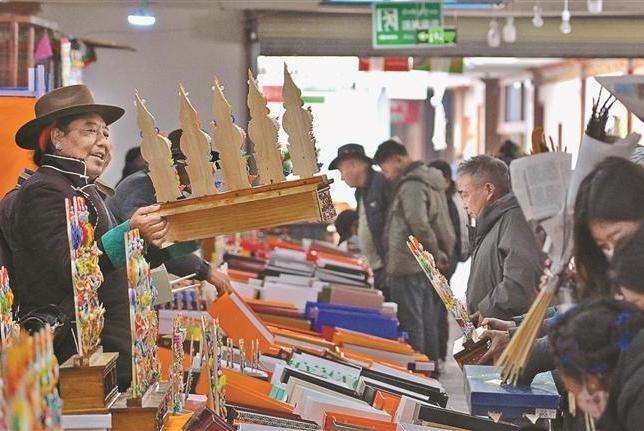
Butter Lamp Festival in Xizang is the last climax of the New Year Festival and the celebration of Monlam Prayer Festival. Lamas and artisans make butter sculptures of different figures, flowers, birds and animals and display them
On the roof of the world—the Qinghai-Tibet Plateau—circulates a heroic epic longer and more vibrant than the Homeric epics—The Epic of King Gesar.
On October 16th, a Tibetan style watchtower was erected in Banma County, Golog Tibetan Autonomous Prefecture, Qinghai Province. The history of Tibetan style watchtowers in the Banma region can be traced back to 800 years ago.
The papermaking technique of Shora Tibetan paper in Nyemo County, Lhasa City, is a national-level intangible cultural heritage of China.
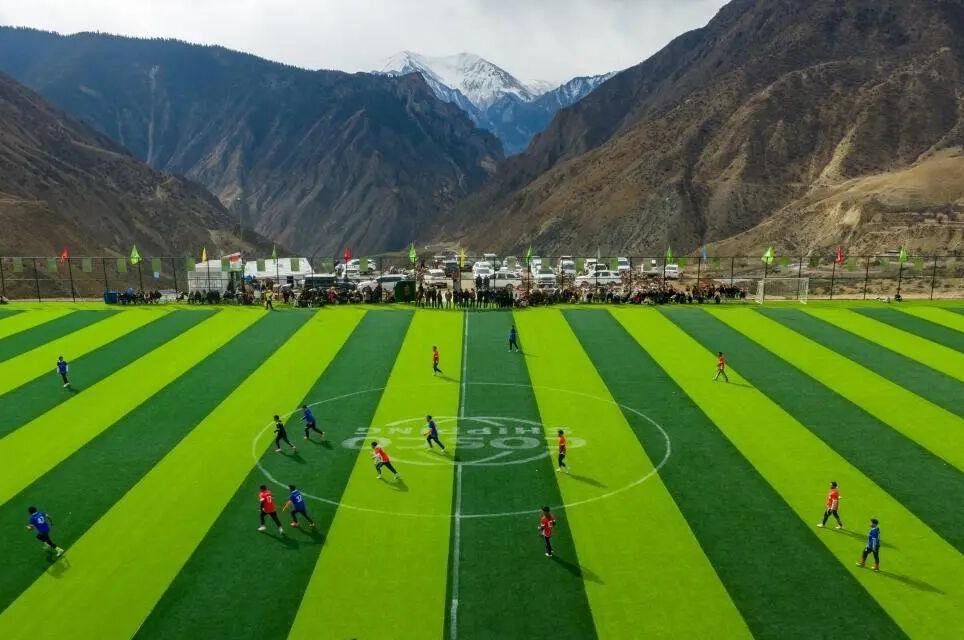
After 12 days of intense competition, the 2025 Nyang River Cup Football Invitational concluded on the afternoon of November 4 in Xizang. In the final match, the Qamdo team triumphed over the Zunyi team from Guizhou Province with a score of 2–1, claiming the championship title.
Tibetan medicine is a shining pearl in the treasure house of Chinese traditional medicine. In November 2018, UNESCO listed the “Tibetan Medicine Bathing Method: Knowledge of and Practices of Tibetans in China on Life,
On October 16th, the Rangbala Tangka art of Rangtang County, Sichuan Province was exhibited in Canada. In this exhibition, more than 50 modern Juenang Tangka works were exhibited, all created by young representative inheritors of Tibetan intangible cultural heritage from the Rangbala Intangible Cultural Heritage Association.
Recently, during the 3rd “Galsang Flower Reba Dancer” Youth Intangible Cultural Heritage Reba Dance Competition, young dancers captivated the audience with their graceful movements, showcasing the unique charm of Reba Dance, a national-level intangible cultural heritage.
Rural villages in southwest China's Xizang Autonomous Region are a microcosm of its historic achievements in comprehensive development since the region's epoch-making establishment in 1965.
Southwest China's Xizang Autonomous Region has successfully found integrated pathways for rural development and cultural inheritance over the past 60 years since the region's founding, according to a report issued on Thursday.
Padruk Tendar has been deeply influenced by traditional Tibetan arts since childhood, including opera and Thangka paintings. Drawing color inspiration from murals and Thangka, he utilizes modern fabrics to reinvigorate Tibetan aesthetics,
Twenty-six-year-old Tawa Tsering is a musician of band "Kardag Garbo," the first band in Xizang composed of visually impaired members. The band was established in 2014 and its name means pure white Khata, a ceremonial white scarf symbolizing goodwill and blessings.
With the arrival of spring, northwest China's Qinghai Province is about to usher in the peak tourist season. In the villages of agricultural and pastoral areas, as well as among urban factories, traditional Tibetan cultural products such as shining silver and bronzewares and gorgeous Tibetan carpets are continuously produced.
A copperware is pictured at a workshop in Yangpo Village of Huangzhong District, Xining, northwest China's Qinghai Province, Sept. 28, 2025.
Xunhua County is a harmonious home where various ethnic groups such as Han, Salar, Tibetan, Hui, and others share weal and woe.
ashi Choden village in Lhoka, Southwest China's Xizang Autonomous Region has been listed in the second batch of national-level tourist spots.
A cluster of Jiarong Tibetan folk houses built with stones sit on the foot of a green hill in Xisuo village, Zhuokeji town, Aba Tibetan and Qiang autonomous prefecture, Southwest China's Sichuan province, on June 12, 2020.