
The cultural context of snow covered areas and the intangible cultural heritage of plateaus
The vast geographical landscape and unique cultural heritage of the snowy plateau have nurtured a profound and distinctive intangible cultural heritage. For thousands of years, various traditional handicrafts have been deeply rooted in the production and life of the people on the plateau, relying on the perseverance and cultivation of generations of intangible cultural heritage craftsmen to pass down the torch from generation to generation. Featured techniques such as Tibetan incense making, traditional weaving, and ancient wine making have become a living carrier of Xizang's excellent traditional culture, engraved with the unique folk memory and humanistic spirit of the snow covered land.
In long-term production practice, the Tibetan ancestors relied on the unique natural resources and living wisdom of the plateau to refine multiple traditional crafts with unique regional characteristics. Tibetan incense production strictly abides by the ancient process, integrates plateau natural herbal materials, and carries the connotation of Xizang's traditional folk customs and health culture; Traditional weaving techniques interweave with latitude and longitude, embodying the aesthetic concepts and life wisdom of the people on the plateau. The craftsmanship is simple and delicate, and the patterns have profound meanings; The ancient brewing technique has been passed down for thousands of years, using unique products from the plateau to brew, preserving the unique culinary customs and craftsmanship of the snow covered region. All kinds of traditional handicrafts have their own advantages and complement each other, forming the core context of the living inheritance of Xizang's intangible cultural heritage.

The weaving products of Zedang Town, Naidong District, Lhoka City, a national intangible cultural heritage project, were showcased at the 6th Tibet Expo. (Xizang Daily | Losang)
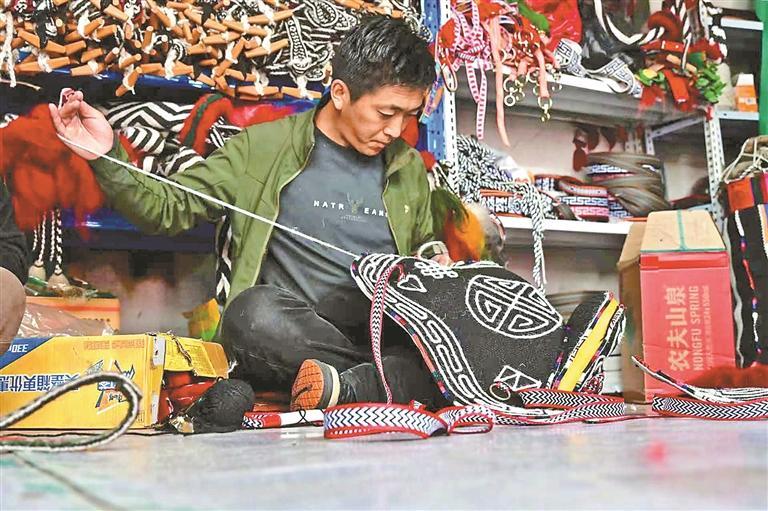
Nima Donzhub from Nakartse County, Lhoka City, handcrafts traditional Tibetan saddle cushions in the store. (Xizang Daily | Tang Bin)
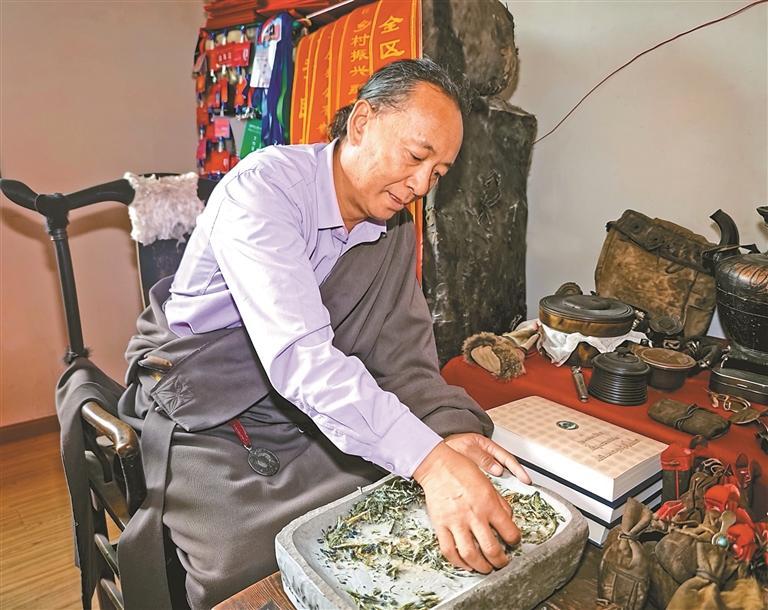
Jiawang Lonzhub, the inheritor of the tea making technique for the Nakchu city's intangible cultural heritage project, is manually grinding natural herbal raw materials from the plateau. (Xizang Daily | Qozhon)
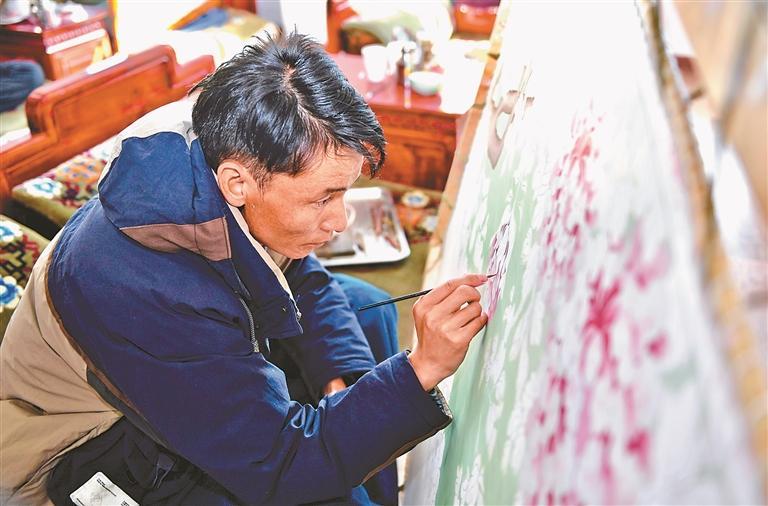
Painter from Xizang Thangka Painting Academy are painting Thangka with new themes. (Xizang Daily | Danzeng Lhaze)
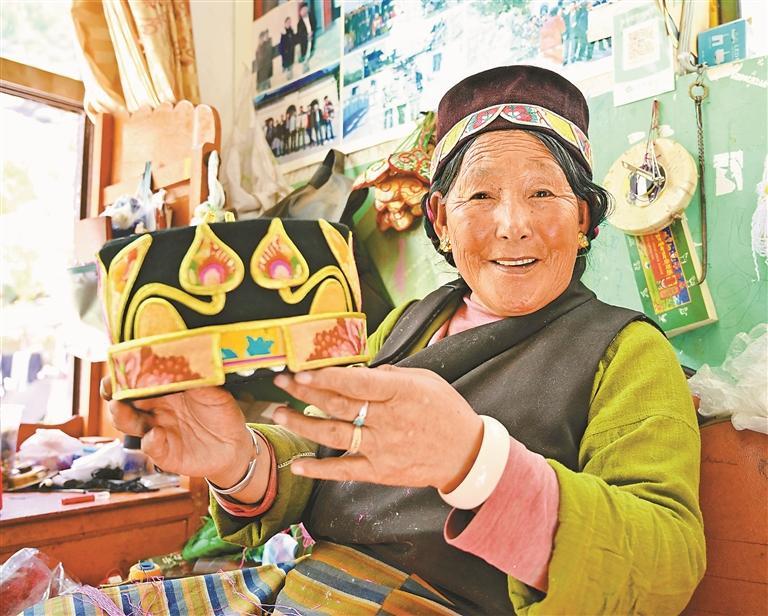
Handicrafts from the traditional knitting processing professional cooperative in MedroGongkar County showcase the completed fur hats. (Xizang Daily | Qozhon)
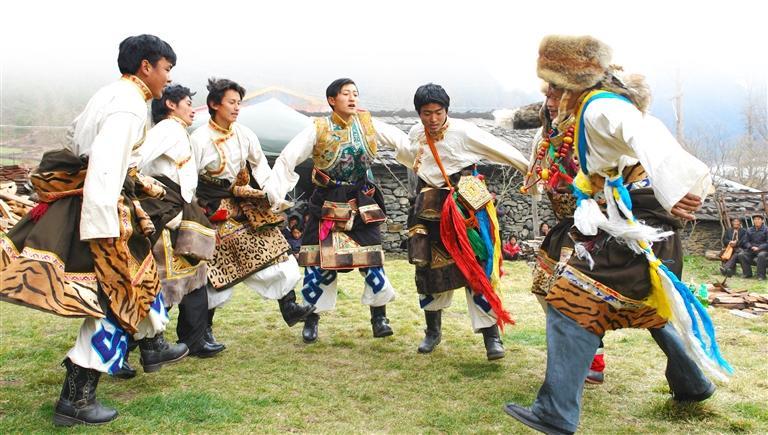
The farmers and herdsmen dance team in PomeCounty, Nyingtri City is performing traditional folk dances. (Xizang Daily | Tang Bin)

Tibetan incense artisans in Nyemo County, Lhasa City are drying Tibetan incense. (Xizang Daily | Tang Bin)