
Amnye Machen Snow Mountain Where Sacred Myth Meets Natural Majesty

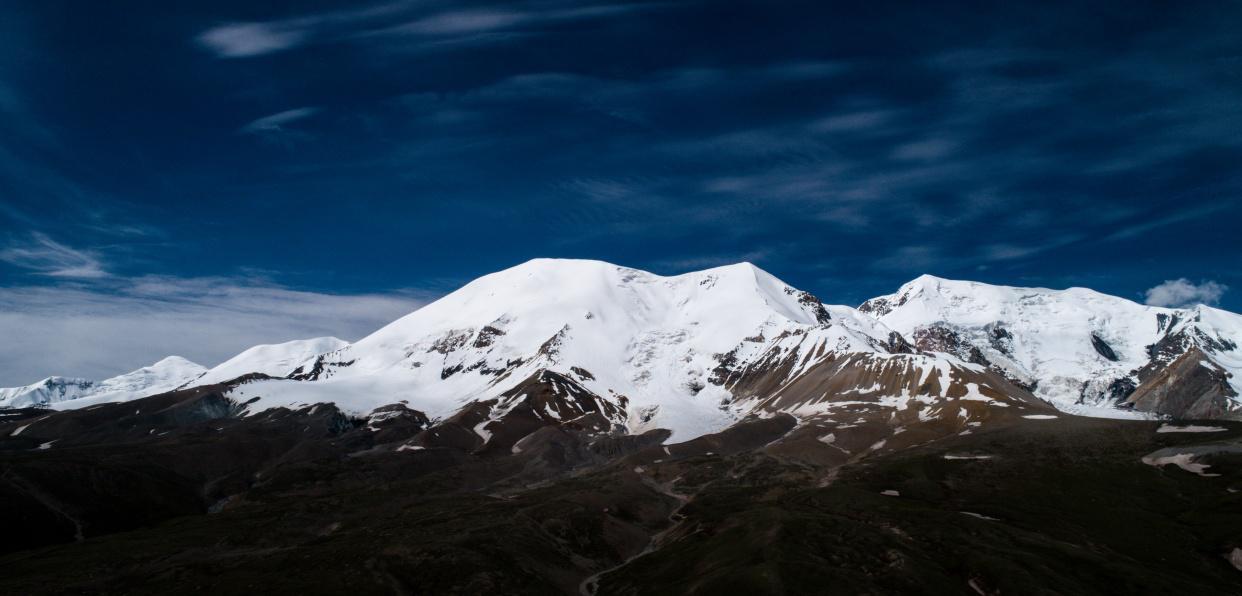
Rising majestically in the heart of Qinghai Province’s Golog Tibetan Autonomous Prefecture, Amnye Machen Snow Mountain is far more than a striking geological formation. It is a living tapestry of natural wonder, ancient mythology, and enduring faith, a silent, snow-capped sentinel that has watched over the local people and their spiritual world for millennia. Located in the northwest of Xueshan Township, Maqen County, this colossal mountain system is dominated by its main peak, Machen Kangri, which stands at an altitude of 6,282 meters. Composed of thirteen distinct peaks with an average elevation of 5,900 meters, and surrounded by an additional seventeen peaks exceeding 5,000 meters, Amnye Machen presents a scene of overwhelming grandeur, its summits perpetually cloaked in snow and ice.

The mountain’s glacial system is exceptionally rich and extensive. It boasts over forty glaciers, covering an area of approximately 150 square kilometers. Among these, the longest glacier stretches 7.7 kilometers with a vertical drop of 1,800 meters, making it the longest and largest glacier within the Yellow River basin. Around the main peak, ice layers can reach dozens of meters in thickness, giving rise to hundreds of ice caves and forest-like crevasses, creating a landscape of surreal, frozen beauty.
The very name “Amnye Machen” carries profound meaning. In ancient Tibetan, Amnye translates to “ancestor” or “forefather,” Ma refers to an original clan name, and Chin means “vast” or “great.” Together, they evoke the image of “the Ma Clan’s Progenitor” or “the Peak of Creation Coexistent with the Universe.” Some scholars suggest that the syllable Ma also carries the meaning of “primordial” or “fundamental,” implying that Amnye Machen has existed since the very beginning of creation. This mountain is far more than rock and ice—it is a sacred being, a god in its own right.
As one of the four great divine mountains of the snowy highlands, alongside Gang Rinpoche, Meili Snow Mountain, and Nyenchan Tanglha, Amnye Machen holds a paramount position in Tibetan cosmology and spirituality. According to A Sacred Gazetteer of the Amnye Machen Snow Mountain by Ojan Sodnam and Abo Garlo, it is revered as one of the nine great creator deities who separated heaven from earth. Beyond its primordial role, Amnye Machen is regarded as the soul mountain of the snowy Tibetan homeland, a place where the spiritual essence of the people is believed to reside. The mountain also serves as a dharma protector for both Buddhism and the indigenous Bön tradition, a revered deity of the epic hero King Gesar, the guardian of inexhaustible treasures, and the subduer of all heretical views and evil teachings.
Ancient historical and religious texts, including The Kadam Book, The Royal Chronicle of Tibet, and The Old Tibetan Chronicle of Dunhuang, provide further evidence of the mountain’s early deification. These sources record that as early as the reign of the first Tibetan king, Nyatri Tsenpo, during the rise of the Bön religion, Amnye Machen was already known as “Majil Bomra”. From that time forward, the mountain was endowed with a divine identity, marking the beginning of its long history as a sacred object of worship. In other words, the rise of Bön marks the origin of the Amnye Machen myths and legends.

According to ancient Tibetan folklore, Amnye Machen was originally one of the eight sons of Bude Gongjal, who himself was one of the Nine Great Divine Kings of the Tubo Kingdom. Respected as one of the nine great mountain deities worshipped by successive generations of Tibetan ancestors, he presides over the northeastern Tibetan Plateau. His divine duties include governing the life, death, fortune, and misfortune of the people in this region, as well as commanding all mountain spirits and malevolent forces to ensure the safety of the faithful. As the earliest and greatest mountain deity here, he is respectfully called “Majal”—the King of the Ma Clan, and also venerated as the ancestral god, god of war, and protector of the Tibetan people.
Tradition vividly describes the appearance of the Amnye Machen mountain deity: he wears a red-tasseled hat and a silver breastplate, and rides a jade-white celestial dragon-horse. In his right hand, he grips a spear; in his left, he holds a banner. A precious sword hangs at his waist, and he carries a bow and arrows. By day, he patrols the skies and the human realm, summoning clouds and rain, unleashing thunder and lightning—bestowing either blessings or calamities, rewarding or punishing gods and mortals, and keeping watch over enemies. By night, he gathers spirits and demons, assigning them their tasks. In the Tibetan areas of Qinghai Province, visual depictions of the mountain god are common, though he is typically portrayed wearing a white helmet, white armor, and a white cloak, riding a white horse and wielding a silver spear—imagery that reinforces his role as a powerful, pure, and protective deity.
The deity is attended by a vast retinue, including nine consorts, nine sons, nine daughters, 360 retainers, and 1,500 divine warriors and attendants. They reside in a three-tiered celestial palace built of gold, jade, and precious gems. Tigers, wolves, jackals, and bears serve as his guard dogs, while wild yaks, blue sheep, deer, and musk deer are his livestock. In every direction surrounding Amnye Machen, different deities guard fortified castles and camps that stretch for dozens of miles, their banners blotting out the sky and their weapons standing dense as a forest. Local residents can often name each of these guardian deities. Many of the mountain’s natural features—glaciers, ice caves, and springs—are believed to be the deity’s treasure houses or prisons where he punishes wayward spirits.
In Tibetan Buddhism, it is held that the Amnye Machen mountain deity has accepted Buddhist precepts and diligently practices dharma. Having attained the tenth stage of enlightenment—the level of a bodhisattva—he no longer concerns himself with worldly affairs. He returns to Amnye Machen Snow Mountain only once every twelve years, during the Tibetan Year of the Monkey, when pilgrims gather to honor him. Additionally, Amnye Machen is regarded as a god of wealth for the Tibetan people.
It is said that the zodiac sign of the Amnye Machen deity is the Horse. Consequently, in every lunar Year of the Horse, all the spirits of the Tibetan regions gather at the mountain. Making a pilgrimage, circumambulating the mountain, and offering worship during a Horse Year is considered equivalent to paying homage to all sacred mountains combined, and is believed to generate vastly greater spiritual merit.
In the Epic of King Gesar, the vast region centered around Maqen Pomra is called Mayul, which is celebrated as the birthplace of the heroic king himself. Within the Gesar narrative, the mountain god Amnye Machen is specifically honored as the “Great Battle God” or “Warrior King,” symbolizing ultimate martial prowess and divine protection in battle.

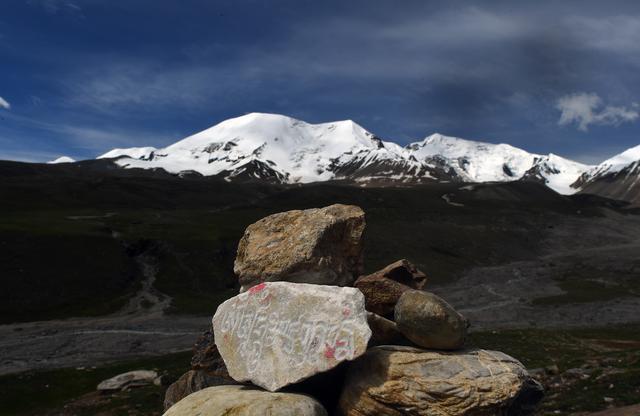
Circumambulating the mountain, known as kora, is an arduous yet revered pilgrimage that takes seven to eight days on foot. The route ascends beyond 4,000 meters, passing numerous sites linked to the epic of King Gesar. These sacred traces connect the mountain not only to celestial realms but also to historical memory, as references to Amnye Machen appear in classical Tibetan works.
Amnye Machen Snow Mountain thus stands as a powerful fusion of geography and mythology, a place where stone and spirit converge, where the wind carries ancient prayers, and where every glacier, peak, and spring tells a story of divine presence and enduring faith.(This article was written by Rencai.)