
Truth About Xizang: People in Xizang respond to rumors with contented lives
For years, separatist forces have peddled false narratives about Xizang, painting a distorted picture of misery and oppression. But what's the real story on the plateau? Our reporter Li Jiaming finds out.
LI JIAMING CGTN Reporter "Recently, there have been dramas orchestrated by separatist forces to smear the livelihood of China's Xizang Autonomous Region. Earlier this year, I had the opportunity to travel to the region where people are allegedly living 'a miserable life'. And this is what I have found."
I am heading towards the Potala Square.
I paid a visit to the iconic Square in front of the Potala Palace, which was once exclusive to monks and nobility; now it is a civil square open to the public for free. People were enjoying a relaxing time with families and friends, waiting for the grand celebration to come.
Tourist "And actually be a tourist I feel like I'm, because I'm not a local in this city and its cultural characteristic is so strong because it says a down a minority group and it also has a Buddhist, a religious culture atmosphere. So I think if I see the size here, I will feel like that I am part of this community, I'm part of this region, it welcomes me."
Tourist "It is pretty safe here, and environment is great!"
LI JIAMING CGTN Reporter "For those who have a stereotype that people in Xizang are not free, here is the fact: majority people in Xizang did not have freedom until 1951, its peaceful liberation."
In the largest local museum, I learned how Tibetan culture has constituted an integral part of Chinese civilization since ancient times and I was also shocked by the dark history that Xizang experienced.
Before the abolition of serfdom in 1959, the region was governed by a feudal theocracy, in which 95% of people were permanent serfs. The upper classes, such as monks and landlords, enjoyed unchallenged privileges, while the lives of serfs were worth no more than a blade of grass.
LI JIAMING CGTN Reporter "Speaking of human rights, people in Xizang are enjoying more rights than ever before. For those who accuse that the Tibetan people are deprived of their rights, they habitually turn a blind eye to these facts."
Within 70 years, the average life expectancy has increased from less than 35 years old to more than 72 years old, its GDP has increased over 150 folds, and the illiteracy rate has dropped from over 90% to less than 1%. A sound medical insurance network has covered over 95% of the population, and 95% of students here receive bilingual education in both Mandarin and Tibetan language.
LI JIAMING CGTN Reporter "Traveling to Xizang is an unforgettable experience. During this trip, I was also impressed by the unity and vibrancy of this region."
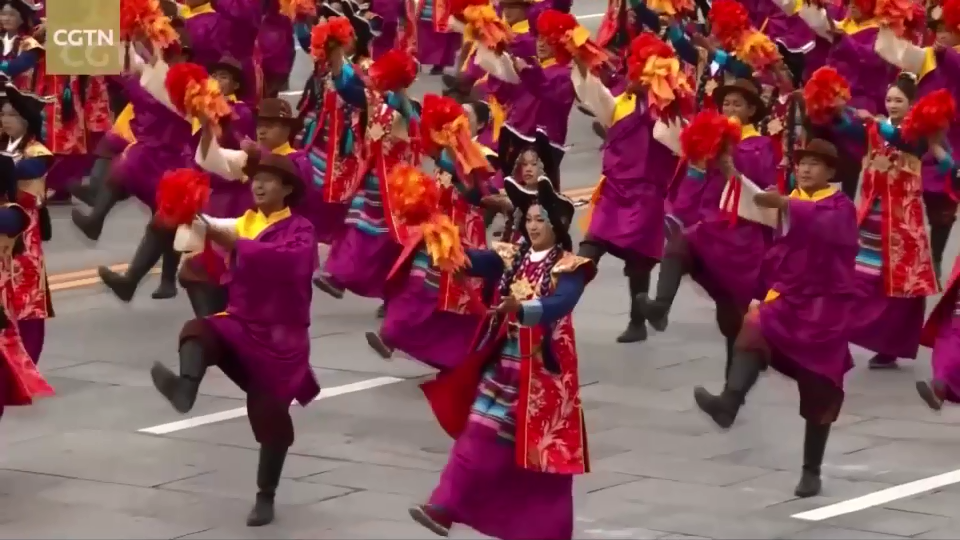
I've seen strong atmosphere of festive celebration: people from across the region wearing ceremonial clothing, showing their pride and unity, and parading for the 60th anniversary of the Autonomous Region.
I have also met with a local fashion designer, who called himself a new Tibetan, and has introduce modern fashion elements into the making of Tibetan carpet, a time-honored local handicraft. It was impressive and also lucrative.
On the roof of the world, local people opened their arms to embrace guests like us, inviting us to join their joyful and relatively slow-paced rhythm of life. Tibetan singing and dancing performances were a staple in nearly every restaurant we visited; following our reporting journey, we were even invited to linger for a few days and take part in the local Shoton Festival celebrations.
Breathtaking scenery, hospitable locals, and a notable level of modernization, collectively constitute my Xizang memory.
LI JIAMING CGTN Reporter "There is no lack of noise about Xizang from those who have never been there. Yet the plateau and the people who call it home respond by living their content and tranquil lives."