
A short Introduction to the Venerable master Atisa
The Venerable Atisa (982–1054 CE),full name is Atisha Dipankara Shrijnana, was one of the most influential figures in the history of Buddhism, particularly for Tibetan Buddhism. He is revered as a master scholar, meditator, and reformer whose arrival in Tibetan Buddhism in the 11th century revitalized a tradition that had become fragmented and confused.

Early Life and Renunciation
Born into royalty in modern-day Bangladesh, a part of the Pala Empire, Atisa was given the name Chandragarbha. From a young age, he showed extraordinary spiritual potential. According to tradition, he had a vision of the goddess Tara ,a female Buddha, who advised him that chasing worldly power and pleasure was a trap. Heeding this advice, he renounced his princely life to become a monk, receiving the name Dipankara Shrijnana.
A Master of Multiple Traditions
Atisa was a prodigious student who traveled extensively across the Buddhist world of his time, from Sri Lanka to the great monastic universities of India, like Nalanda and Vikramashila. He became a master of all three major Buddhist vehicles:
1.The Hinayana—Foundational Vehicle: He excelled in the Vinaya—monastic discipline and Abhidharma—higher teachings.
2.The Mahayana—Great Vehicle: He was a renowned scholar of the Prajnaparamita—Perfection of Wisdom sutras and the philosophy of Madhyamaka—(Middle Way, which refutes inherent existence.
3.The Vajrayana—Diamond Vehicle: He received many tantric initiations and teachings, yet he always maintained that tantra must be practiced on a foundation of ethical discipline and bodhicitta—the awakening mind.
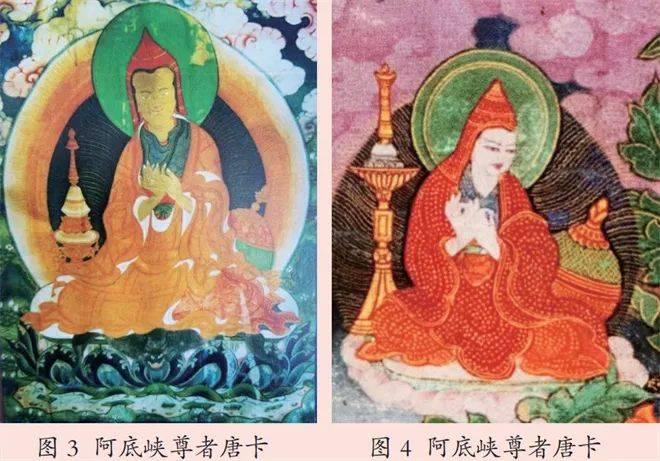
The Famous Invitation to Tibet
By the late 10th century, Buddhism in Tibet had been suppressed by a king and had become corrupted. Many Tibetans confused tantric rituals with license to ignore ethics, and the original, pure teachings from India had faded.
The king of the western Tibetan kingdom of Guge, Lhalung Yeshe Ö, sacrificed his own life,by paying a ransom of gold equal to his weight, which he was captured before he could deliver,to invite Atisa. His nephew, Jangchub Ö, continued the effort. Moved by their profound sincerity and the desperate state of Tibetan Buddhism, Atisa, despite being in his 60s, made the arduous journey over the Himalayas to Tibet, arriving in 1042 CE.

Core Teachings and Reforms
Atisa spent the last 12 years of his life in Tibet, writing, teaching, and translating texts. His greatest contribution was his seminal text, "Bodhipathapradipa"— The Lamp for the Path to Enlightenment .
This short but revolutionary text introduced the Lamrim—Stages of the Path— framework. It systematically arranges all of Buddha's teachings into a clear, step-by-step progression for a single practitioner. It starts with basic concepts ,impermanence, karma, progresses to the wish for liberation, and then to the Mahayana ideal of achieving enlightenment for the sake of all beings— bodhicitta.
Crucially, the Lamp clarified the relationship between Sutra and Tantra, establishing that ethical conduct and bodhicitta are the indispensable foundation for tantric practice. This directly countered the corrupt practices he found in Tibet.
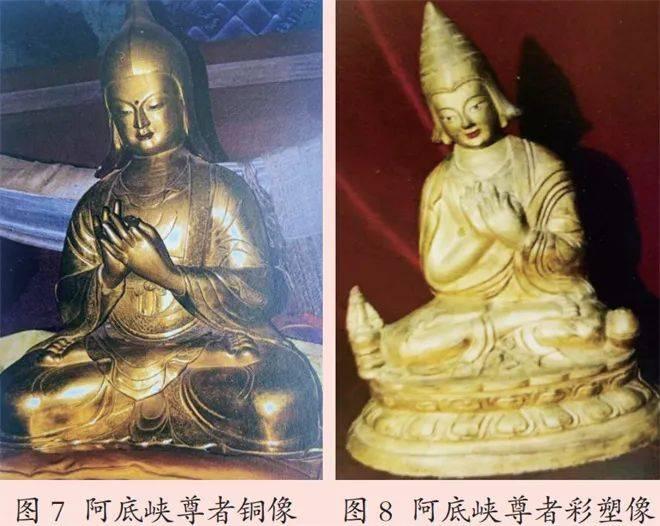
Legacy
Atisa is the founder of the Kadam school of Tibetan Buddhism. While the Kadam school as an independent lineage eventually faded, its core teachings—the Lamrim and the emphasis on bodhicitta—were absorbed into every other school of Tibetan Buddhism.
His influence is most visible today in the Gelug school (the tradition of the Dalai Lamas), whose founder, Tsongkhapa (14th century), based his monumental Lamrim Chenmo (Great Treatise on the Stages of the Path) directly on Atisa's Lamp. In the Sakya and Kagyu schools, the Lamrim is also a central, foundational teaching.
In summary, Venerable Atisa was not just a scholar, but a practical spiritual engineer. He took the vast, complex ocean of Buddhist philosophy and distilled it into a clear, reliable map that any sincere practitioner could follow—from the very beginning all the way to full enlightenment. He is rightfully honored as one of the greatest masters of Indian and Tibetan Buddhism.